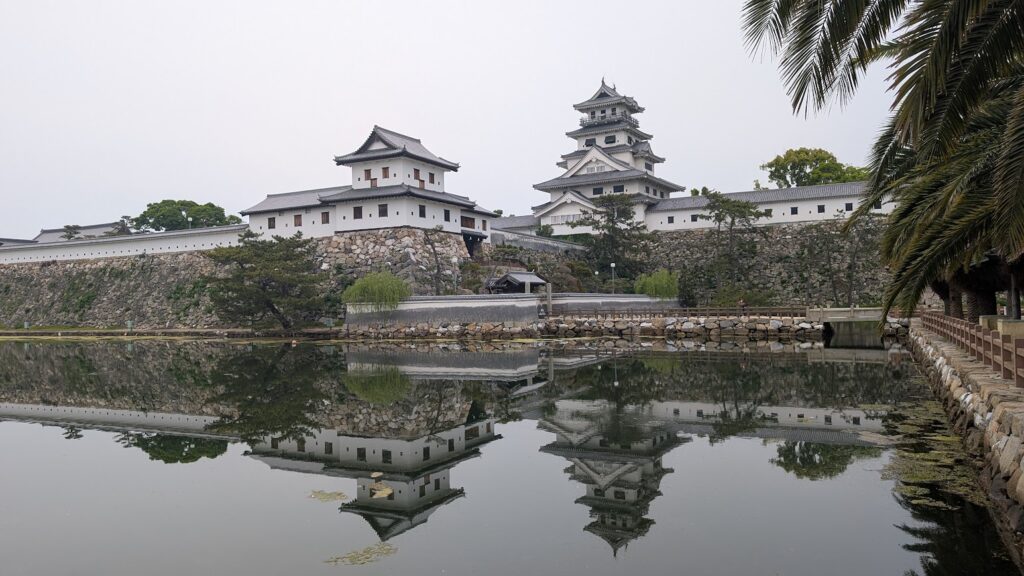
Shimanami Kaido
My Birthday – Spent a Little Differently
I’m not big into celebrating birthdays—it’s just another day (“T Carey 2025”). But when my birthday rolled around during my travels, I found myself doing something unforgettable: cycling the Shimanami Kaido from Onomichi to Imabari, traversing seven islands of the Seto Inland Sea. The route is about 80km—supposedly “easily doable for the average cyclist.” As I discovered, I’m not quite average.
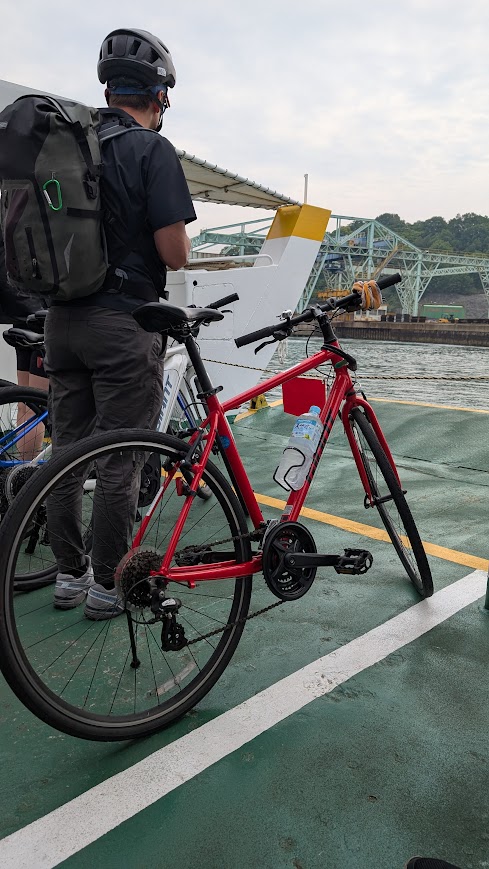
After chatting with a Dutch and a Swiss tourist—one of whom breezed through the ride in four hours—I set off, feeling confident. My rental was a distinctly average cross bike, while others opted for E-bikes. The excitement of seeing the bridges linking the islands, and the stunning geology beneath them, kept me going. Here’s how my journey unfolded, bridge by bridge, island by island, all the way south to Shikoku.
The Geological Story Beneath the Route
The islands of the Shimanami Kaido are the peaks of ancient mountains, exposed by the slow flooding of a tectonically depressed basin. Their granite and metamorphic foundations speak to a history of collision and uplift, while volcanic activity has left its mark in the form of lava domes and fertile soils. Over millennia, erosion carved steep hills and rocky coastlines, and valleys filled with rich earth—perfect for the citrus groves that line the route.
- Notable Geological Events:
- Late Cretaceous (~100–66 million years ago): Major tectonic collisions uplifted the region, forming granite mountains.
- Miocene Epoch (~23–5 million years ago): Volcanic activity created lava domes and contributed to fertile soils.
- Quaternary Period (last 2.6 million years): Sea levels rose, flooding the basin and leaving only the mountain peaks as today’s islands.
Each bridge not only connects islands, but also spans chapters of geological history, making the Shimanami Kaido a journey through both space and time.
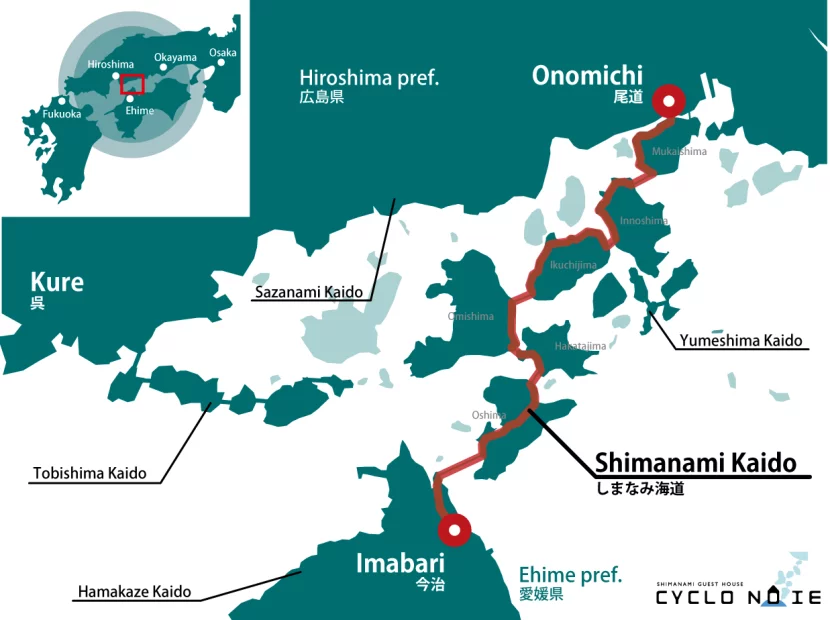
My North-to-South Journey: Bridge by Bridge
Shin-Onomichi Bridge: Crossing to Mukaishima
My adventure began in Onomichi, with a short ferry ride to Mukaishima for the princely sum of £0.50. The Shin-Onomichi Bridge (opened 1983) loomed ahead—a cable-stayed bridge stretching 1,440 meters, its elegant white towers marking the true start of the route. The blue line on the road guided me forward, optimism high as I left the mainland behind.
- Notable Feature: The bridge is not open to cyclists, so the ferry is the classic start for most riders.
Innoshima Bridge: To the Heart of the Seto Inland Sea
After a gentle ride through Mukaishima’s quiet lanes, I reached the Innoshima Bridge (opened 1983), a 1,339-meter-long suspension bridge. Its lower deck is reserved for cyclists and pedestrians—a blissful experience, with the hum of traffic above and peaceful views of fishing boats and rocky shores below. Crossing into Innoshima, I admired the hilly terrain, primarily composed of granite shaped by ancient tectonic forces.
- Notable Feature: One of the first in Japan to feature a dedicated cycling path.
Ikuchi Bridge: Citrus Groves and Art
Leaving Innoshima, the Ikuchi Bridge (opened 1991) beckoned—a 790-meter box-girder bridge. The ride was smooth and steady, leading me into Ikuchijima, where the landscape softened into fertile valleys. Citrus groves flourished thanks to mineral-rich soils from weathered granite and volcanic rocks. I plucked a lime from the side of the road to spice up my water and pressed on.
- Notable Feature: The bridge’s design allows for gentle inclines, perfect for cyclists.
Tatara Bridge: Engineering Marvel to Omishima
Next came the Tatara Bridge (opened 1999), a cable-stayed marvel stretching 1,480 meters—one of the longest of its kind in the world. Its twin towers rise 220 meters above the sea, supporting a span that seems to float above turquoise waters. The approach ramp is gentle, designed with cyclists in mind, and the views are breathtaking: tiny islands dotting the shimmering water, all shaped by millions of years of tectonic upheaval.
- Notable Feature: The main span is 890 meters, making it a record-holder at the time of completion.
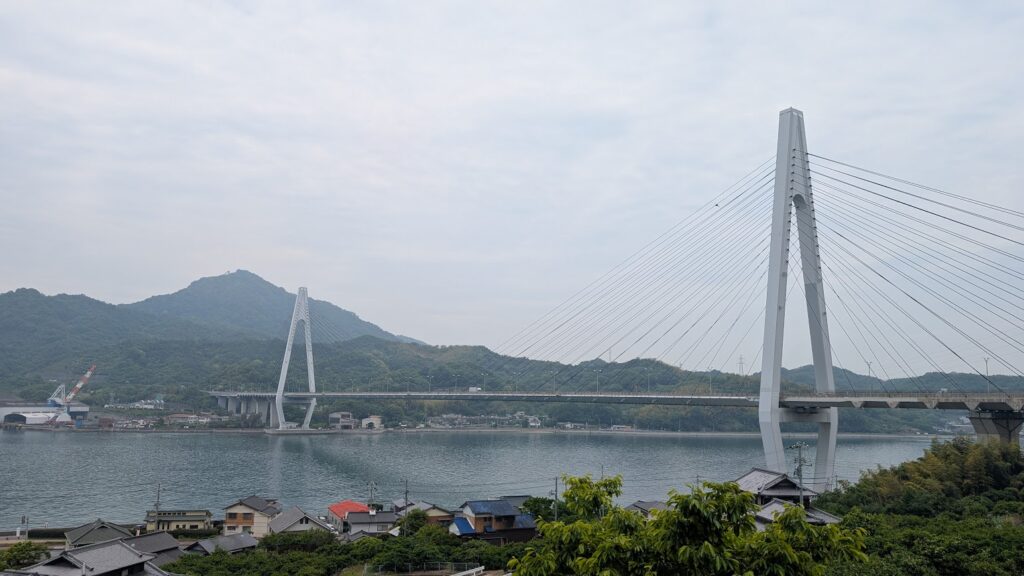
Omishima Bridge: Into the Mountainous Heart
Omishima greeted me with its mountainous interior and lush valleys. The Omishima Bridge (opened 1979) is a 328-meter-long arch bridge, gracefully carrying me across a narrow strait to Hakatajima. The island’s rugged coastline and steep hills are a testament to its ancient granite roots and volcanic remnants.
- Notable Feature: Its arch design blends beautifully with the surrounding landscape.
Hakata-Oshima Bridge: Over the Channels
Cycling through Hakatajima’s scenic roads, I reached the Hakata-Oshima Bridge (opened 1988), a pair of cable-stayed spans totaling 1,165 meters. The wind picked up as I crossed, and I paused to take in panoramic views of the Seto Inland Sea, its waters shaped by powerful currents.
- Notable Feature: The bridge’s two main spans leap from rocky promontory to promontory—an engineering challenge due to the strong tidal flows below.
Kurushima-Kaikyo Bridge: The Grand Finale
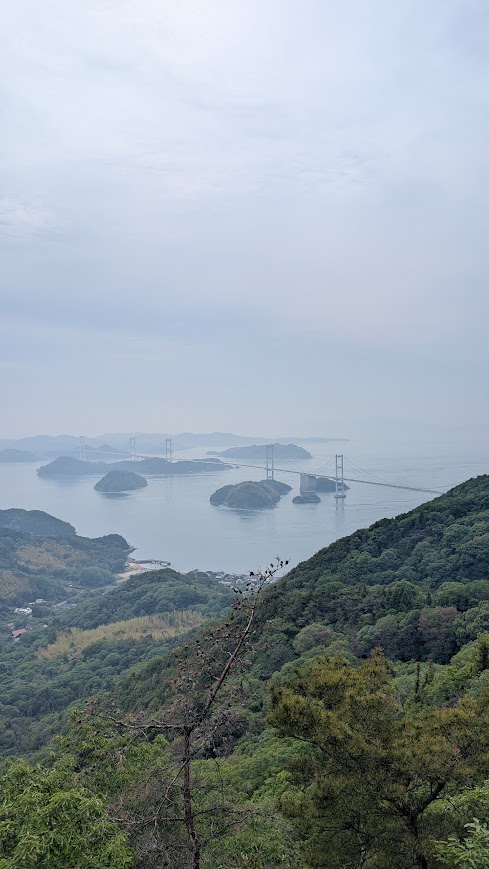
Finally, the Kurushima-Kaikyo Bridge (opened 1999) awaited—a triple suspension bridge and the longest of its kind in the world, stretching 4,015 meters in total. As I pedaled across its vast expanse, the towers rising high above, I looked back at the chain of islands and bridges I had conquered. Below, the swirling currents of the Kurushima Strait reminded me of the geological forces that created this remarkable landscape.
- Notable Feature: The bridge is actually three consecutive suspension bridges, with a total of six towers and four anchorages.
Reflections
Cycling from north to south, each bridge and island revealed a new facet of the Seto Inland Sea’s natural and human story—a ride I’ll never forget. The journey was as much through time as across distance, with every pedal stroke tracing the contours of ancient mountains, volcanic eruptions, and rising seas. My 31st birthday may have been “just another day,” but it became a personal odyssey across one of Japan’s most extraordinary landscapes.